Showing posts with label India. Show all posts

Sunday, April 12, 2015

WHAT AILS INDIAN CIVIL AVIATION? (Part 2)


On 20 March 2015, while FAA was in the process of re-evaluating India's safety rating, I had written a post on this same subject (WHAT AILS INDIAN CIVIL AVIATION?). FAA has subsequently considered it appropriate to upgrade India's rating to category 1. Now we have some disturbing news from India that only goes to support my view that India, at this time, does not deserve the Category 1 status! The news from India is as follows:
 
http://www.newscrunch.in/2015/04/brave-act-air-india-crew-overloads.html

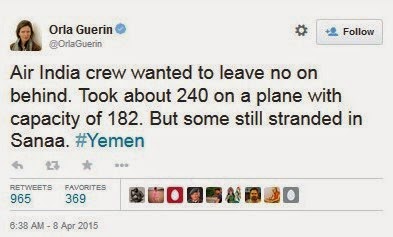
https://twitter.com/OrlaGuerin/status/585753515768868864

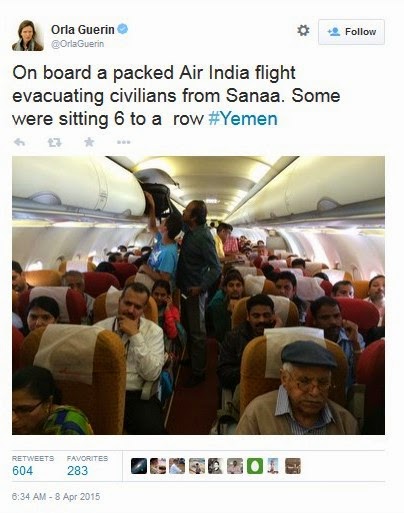
https://twitter.com/OrlaGuerin/status/585752552148443136

In my opinion, this incident in which the crew are being hailed as “Hero’s” for this “Amazing Feat”, and Indian DGCA’s lack of any reaction to it, represents everything that is wrong with Indian Civil Aviation. The arguments I have heard in the social media are as follows:

“Extreme circumstances require Extreme Solutions.... Better than an assured and painful death...”

“So you mean that under those conditions people should have been left to die... Please get real... No need to be an Academic in the situation that was...”

“Rules do not apply in toto for a Humanitarian Aid...”

I believe that at the end of the day... 240 Thankful Souls and Human lives have been saved. Humanitarian consideration is supreme.

“…calculated risks. Today's aviation is rule bound with no room for discretion. I am of the view that a bit of room needs to be given for discretion…”

Well, the answer to these arguments is that just like light is not absence of darkness, but presence of energy, safety is not absence of accidents, but presence of risk management. Principles of basic aviation risk management must be followed always and every time. To have an accident is not a crime but violation of standards is a crime!

“240 Thankful Souls and Human lives” were not saved in this flight, but lives of 240 unsuspecting innocent people were put to needless and avoidable risk! People who were desperate. People who had no option but to trust the professionalism and competence of the Indian Civil Aviation System to take them safe. People whose trust and faith has been betrayed by that very same system in the end!

My question is, if this flight had crashed, would we still be hailing this crew as “Hero’s” or would we be screaming “Pilot Error” and asking for the Pilot’s head to roll for overloading the aircraft? So, what message are we sending out there? The message I am getting is that it is Ok to violate as long as you do not have an accident! This is a very dangerous message, because once we set out on this path, there is no knowing who will violate what, when and to what extent! So, how many passengers more than the aircraft’s seating capacity are we willing to accept in a flight? In this case, the flight was loaded to 60 more than the seating capacity. So, if 60 is OK, is it also Ok to have 80 more? 180 more? 1,000 more? Where will we draw a line? Who will decide? On what basis will this decision be made?

The logic of putting lives of 240 people at risk to save 60 (who will also be included in this body count) escapes me! The basic mantra of Safety Risk Management cannot be overstated…while having an accident is not a crime; violation of standards is a crime…Always, and every time.

https://www.createspace.com/4583791
To understand the full implications of this incident, we need to go a bit deeper into how human minds work. I had also touched on this subject in the last chapter of my book “Waiting…To Happen!” and this will also be the prime subject matter of my next book that is, at this time, under production. However, to elaborate very briefly, humans are very adaptable. It is this trait of adaptability that has been one of the major factors in our survival as a race. A flip side of this adaptability is that we also adapt, very quickly, to risks in our environment and stop perceiving them as threats. An example can be found in driving a car. Initially, one may feel afraid to cross, say 40 Km/hr. speed. Nevertheless, one trip on the highway, driving at 60 or 80, and we stop seeing 40 as a risk any more. Then we quickly adapt to 60, 80, 120 or even more! In addition, humans are motivated by, among other factors, a “Need for Professional or Social recognition”. Seeing someone recognized/rewarded for an act motivates us to follow in that persons footsteps and do something similar. On the other hand, seeing someone punished or shunned for an action motivates us to avoid putting ourselves in the same situation. This is the basic theory on which “Carrot and Stick” policy works to modify human behavior and maintain discipline in an organization while also creating an “Organizational Culture”. 

Now, put these two concepts together. By recognizing the crews action (of overloading aircraft by 60 passengers more than the aircraft’s seating capacity) as an act of bravery, we are sending a message that it is more important to help someone than to follow correct procedures. The further message that goes across is that it is OK to violate safety standards and regulations to help someone. Now, a young and aspiring crew-member would latch on to this message very, very quickly. This will put them on a path where, in the end, there will be no control over who will violate what, when and to what extent! As long as they themselves feel justified, they would go ahead and violate…and while in this case the crew got away with the violation without an accident, the same will not be true every time or in every situation…and we will be left wondering, why did someone so well trained and experienced do something so stupid? The answer is simple. They did something so stupid because we set a precedence by recognizing and rewarding someone else’s violation instead of nipping the problem in the bud by strong action to send a message that INTENTIONAL violation of standards, and negligence, are never acceptable, whatever the circumstances! This is what is called an “Exceptional Violation” and in the chart below, an exceptional violation that amounts to negligence, is the ONLY violation that warrants a punishment.

http://pothi.com/pothi/book/captain-samir-sam-kohli-waiting-happen


So, PLEASE WAKE-UP INDIA! By praising this action and by not taking strong action to nip this in the bud, you are on a path whose end will only be in destruction and disaster!

Stay Safe,

The Erring Human.

Friday, March 20, 2015

WHAT AILS INDIAN CIVIL AVIATION?

India was downgraded by FAA to Category 2 in early 2014. Following this humiliating audit assessment, some changes have been made and now India is getting ready for a review in March/April 2015. So, this is the occasion to highlight once again what actually ails Indian Civil Aviation so that the core issues can be separated from the noise and rumors. It is only through proper understanding of the on-ground situation will it be possible to separate the truth from politically motivated rumors and ensure necessary corrective actions are taken in the right direction. After all, the first step in solving any problem is acknowledging that there is a problem, and then as a second step taking ownership of the problem for further corrective actions to be implemented.

 
I had covered this subject at great length in my book “Waiting…To Happen!” where, using the case study of Air India Express IX812 crash at Mangalore, an assessment of what ails Indian Civil Aviation was undertaken. All the lessons Indian Civil Aviation needs to learn can be learnt from a football club! I offered this analogy in my book where even the cover image was specially designed to convey this message. The image depicts a football goalpost with a figure in Pilots uniform instead of a goalkeeper. The person is diving to save a goal, and instead of a ball, coming-on is an aircraft. The message is clear. Pilots are no different than goalkeepers. They are our last line of defense and the only team members capable of using their hands to save a loss. However, just like the goalkeepers, in the end they are merely humans and members of a team. If rest of the team does not perform, the goalkeepers can do little to save the loss. This is also evident from the fact that major football clubs often fire their Managers, Coach or Captain in the event of a poor season performance, but rarely do we see a goalkeeper getting the axe. However, in the aviation industry, and particularly in India, we seem to have a greater focus on the goalkeeper than the team management. Following examples will help clarify this point.

IX812, Mangalore 22 May 2010. The officially conducted inquiry closed the case with a “Pilot Error” verdict. However, the facts are that the airport was neither built, nor maintained, in accordance to standards stated in the Indian Civil Aviation Regulations. Runway friction had not been checked for many years and the runway had extensive rubber deposits leading to a loss of breaking friction; RESA was non-compliant with minimum required length; surface of RESA was hard and had not been prepared to offer a deceleration; the base of ILS localizer located inside the runway strip was made of concrete and was therefore not frangible. Right wing of the aircraft struck this concrete base and was sheared off, fuel spilled and came in contact with the right engine and started a fire that spread rapidly, consuming the entire aircraft within minutes. 8 survivors have given evidence that others were alive but overwhelmed due to rapid spread of fire. Runway controller was not looking at the aircraft and even 5 minutes after the crash is heard on radio calling the aircraft and issuing back-track instructions. No crash alarm was ever sounded. ARFF responded only when someone called them and informed that they can see fire at the end of runway. By then the aircraft had fallen down a ravine. This happened because the mandatory 1000m area required at the end of runway did not exist. There is no record of the airport ever having conducted a crash exercise, which is mandatory every 2 years. No procedures existed for responding to this situation. No access roads had ever been contemplated. No coordination with local firefighting departments and local administration had ever been concluded. ARFF vehicles took 30 minutes to reach the crashed aircraft. 152 of the 158 killed had no evidence of trauma, impact or decelerative injuries. Cause of death for all of them was established due to burns and asphyxiation due to smoke in lungs. The airport had undergone a routine surveillance audit by the DGCA just two days before the crash and received a “Satisfactory” rating.


Is this Pilot error? Yes, the pilot did make mistakes. But there is also evidence that he was suffering from Hypoxia. Despite all the mistakes of the pilot, the event was survivable and would not have resulted in a disaster if the airport had been constructed and maintained in accordance to standards. Quoting Justice Moshansky from the Dryden accident report, “… while the crew must accept accountability for their decisions, it is clear that the Civil Aviation System failed them by allowing them to be placed in a situation where they did not have the support they needed and should have received.”

Jaipur, 05 Jan 2014. AI890 from Guwahati to New Delhi diverted to Jaipur, after holding for over one hour, due to poor visibility. On arrival, visibility had reduced below minima at Jaipur also. Now low on fuel, pilot had no option but to attempt a landing. On touchdown in near zero visibility, aircraft burst tyres and suffered a runway excursion. Left wing of the aircraft struck a tree 52 m south of runway edge, 1340 m down the 2780 m Rwy 27. Aircraft had exhausted fuel and hence there was no fire, but if the aircraft had any fuel in that wing the result of this collision would have been similar to what happened with IX812 in 2010.


Once again, ARFF could not reach the aircraft because they had never trained to respond to an emergency in low visibility. Once again, while the airport had been assessed as “satisfactory” by the DGCA in last surveillance audit, there was no evidence of any crash exercise and the airport did not comply with standards because as a Code 4D airport, it should have had a 75 m runway strip on either side, clear of any obstruction. DGCA issued many directives with regards to Pilot training standards as a consequence of this accident, but the issues of non-standard airport, lack of ARFF preparedness and regulatory lapses were glossed over.

Issues with Pilot proficiency checks, pre-flight medicals and validity. There have been many cases where DGCA has acted to suspend licenses of pilots flying with proficiency checks due, without pre-flight medicals or with expired licenses. The issue here is that pilots are employed by an AOP holder and perform inside an organizations policies and procedures. It is the operator’s responsibility to ensure employed pilots meet the regulatory standards and comply with applicable regulations. The pilots do not work for DGCA, but for an operator who holds a valid AOP. Disciplining the pilots is the job of their employer. Responsibility as well as accountability for enforcing compliance rests with the AOP holder and in the event of non-compliance, the AOP holder needs to be disciplined, through sanctions, financial penalties or even temporary/permanent suspension of the AOP. Focus needs to be on the team management, who needs to ensure that the employed goalkeeper is properly trained, holds the required certifications and plays in accordance with the rules of the game!

So, what ails Indian Civil Aviation? Research at ICAO has demonstrated that most accidents today are caused due to organizational factors. I have explained the following diagram in great detail in my book, “Waiting…To Happen!”, but I believe the figure below is also self-explanatory.

Active failures (Errors/Violations) by humans constitute only 20% of the whole. All human performance happens inside an organizations policies and procedures. If these are weak/not implemented, sooner than later the humans will be overwhelmed and pushed to err. Human error is a symptom, not a disease. The disease is “Poor Organizational Management” and this is what ails Indian Civil Aviation.


Lessons from Football. We need to learn our lessons from the way we manage our football teams! Our team to manage Aviation Safety can be described as follows:

Manager:   Ministry of Civil Aviation.
Coach:   An Independent Accident Investigation body.
Linesman:   ICAO.
Captain:   National Regulator, DGCA.
Forwards:   License/AOP holders “Accountable Managers”.
Midfielders:   Managers in an AOP holder’s organization & DGCA Auditors.
Defenders:   Line Management, Ground crew, Engineers, Air Accident Investigators.
Goal Keeper:   Pilots.
Rules of the Game:   Primary Civil Aviation Regulation.

This analogy can then be transcended down to any level of any organization. The CEO or the equivalent, even a departmental head then becomes the Team Manager and other designations below appropriate to the complexity and size of the organization.

Unfortunately, in Indian Civil Aviation today, the Team Management consists of bureaucrats with no professional experience in Civil Aviation. There is no functional independent aircraft accident investigation body akin to NTSB or AAIB. This team is playing without a coach. The team Captain, DGCA, is a bureaucrat too, selected for his civil services, and not civil aviation, skills. The Captain does not understand the complexities and strategies of the game. The DGCA also sits on the management boards of AAI and AI. This is like having the team Captain also manage the opposite team and, thereby creating a conflict of interest, interfering with his ability to regulate in a fair and unbiased manner. There is no accountability enforced on rest of the team members.

The team plays on strength of its goalkeepers and there is constant stress on them due to non-performance of other team members. This leads to a failure of the man-machine interface due to the human part of system being over stressed as is evident from the large numbers of “human error” events that have occurred in recent past displaying symptoms of the disease called “Poor Organizational Management”.

The rules of the game or Civil Aviation Regulations (CAR) are flawed too. ICAO has published “Standards and Recommended Practices” (SARPs) which are very intuitive and have wide applicability. But ICAO SARPs are not legally implementable. The CARs are the law and only they can be enforced inside India. While copying ICAO SARPs, all Recommendations have been converted into Standards. This has been done across the board, without any justification and without any assessment/evaluation on their need, applicability or implications. This has resulted in the CARs being in-implementable on many occasions or leading to exorbitant and wasteful expenditure to implement something that does not add any value to the operation. This also results in wasted resources and higher operating costs, making the entire industry in-profitable and susceptible to collapse. This also then results in violations by the operators, which are then ignored because the law itself is in-implementable. The result is a system where rules are followed or ignored at will, depending on the organizations financial abilities and political clout rather than based on a risk assessment and implementation of justifiable mitigation measures. There is an urgent need therefore to correct this situation and reform the rules of the game – the Primary Civil Aviation Regulation.

To sum-up. In the end, the diagram below represents what the relationship ought to be between a Regulator and a Service Provider. This is what needs to be implemented with a strong leadership and accountability at every level in every organization. A detailed explanation has been included in my book “Waiting…To Happen!” under the heading “Dilemma of the two P’s”.


Stay Safe,

The Erring Human.

Saturday, February 7, 2015

#TransAsia #GE235 - The Erring Human strikes again!!!


These dramatic images have been seen splashed across all news channels over the last few days. Wednesday's crash into a river in Taipei minutes after takeoff killed at least 36 people and left seven missing. Fifteen people were rescued with injuries after the accident, which was captured in a dramatic dashboard camera video that showed the ATR 72 propjet banking steeply and scraping a highway overpass before it hurtled into the Keelung River.

The Pilots, initially hailed as heroes for avoiding crashing into a building and steering the aircraft away from populated area, are now under investigation for apparently shutting down the wrong engine. Investigators are now talking about one of the two engines on TransAsia Airways Flight 235 going idle 37 seconds after takeoff. The pilots apparently shut off the other before making a futile attempt to restart it. While at this time, no one is willing to say it in so many words, what is being implied is that the pilots erroneously shut down the wrong (good) engine and escalated a situation of single engine failure into a double engine failure, leaving the plane devoid of any propulsion!

This is certainly not the first, or the last, time something like this will happen. But one does expect qualified and experienced flight crew not to make such mistakes. So, are the crew Heroes or Zeros? Was this a "Pilot Error" accident?

As we have discussed many times before also in this blog, "Pilot Error", or "Human Error" as it should be called, is not the disease. Exactly like a sneeze, or cough, or fever, it is merely a symptom of a disease. The disease is Poor Organizational Management. Mistakes made by the designer, the executive, the regulator, the administrators and all others in the chain of Aviation Management, gradually reduce the safety margins available to the flight crew ultimately creating a situation where the crew are left with no room for error or to correct any of their mistakes.

Engine Failure on take-off is the worst of a Pilots nightmares. It is something we all train for from the very first day we learn to control an aircraft. It is something that the instructors meticulously hammer into our brains. Manufacturers develop elaborate procedures to deal with this event. Regulators check and certify these procedures as well as the training to execute them. Most simulator sessions are designed around ensuring the crew are properly prepared and trained to deal with just such events.

My question is why? Why do we need all this? Is it not sufficient to just train the pilot once and be done with it? After all, we employed a pilot who holds a valid license and is properly certified to fly our aircraft, so he should do his job well, yes?

What we forget in such a premise is that the pilot we employed is human, not a computer. And humans err. Like it or not. Love it, or hate it, but we have no option to using humans to do these tasks. And humans do err. So, it is very important for us to learn to live with these Erring Humans and to still be able to prevent a single point error leading to a disaster. That is the job of the management. That is why we need regulators. If everyone simply did what they were told, or taught, then no business would ever require a supervisor or a manager. Supervisors and Managers are paid more than workers to sit comfortably in air conditioned offices and talk big words in board meetings smartly dressed in perfumed business suits while sipping on the most expensive wines while the work-force labours outside exposed to the elements, because they are supposed to SUPERVISE...they are supposed to have an outlook and foresight to anticipate problems and ensure adequate actions are taken BEFORE an accident happens to ensure that it does not happen. They are supposed to be able to monitor trends and forecast the future outlooks and then ensure the organization is properly prepared to deal with any adverse event that can be foreseen.

Part of this job is ensuring recurrent training for the crew, to ensure that critical events are drilled repeatedly, to ensure that no one ever forgets what is most vital to be remembered, like identifying the correct engine that has failed and actions then necessary to prevent an escalation of that situation. Today, after this accident and death of over 36 innocent people, the Taiwanese Regulator and #TransAsia have stated that all ATR 72 Pilots must undergo vital emergency procedures check in the next 4 days, or they will not be permitted to fly.

The question that arises here is, why was this not ensured before the accident? Is this not what the Regulator exists for, to start with? Is this not the reason for which exist the regulations of Line and Proficiency Checks?  Is this not the reason why the Airline is supposed to have a Training Programme, managed by a Training Captain? Is this not the reason why there needs to be a Safety Management System? What were all these managers doing up until this point in time?

Do we need protection from a pilot who shut down the wrong engine? No Sir. We do not. We need protection from a system which allowed that pilot to be in that cockpit without having the minimum essential training, without having a recurrent training and checking programme, without having adequate supervision and control.

In the words of Justice Moshansky (Dryden Accident Report), "While there is no doubt that the Pilots must accept accountability for their decisions, actions or inactions, it is clear that the Civil Aviation System failed them by allowing them to be placed in a situation where they did not have the support they should have had!"

I, The Erring Human, have struck again. This time I killed 36. And I will continue to do this. I will continue to err. I will continue to kill. If you want to stop me, you need to ensure good and professional management of the operation! You need to ensure the regulators do their job. You need to ensure the organization structure is clear and coherent. You need to ensure the managers in that organization understand and do their jobs. You need to ensure a Safety Management System, identification of hazards, tabulation of associated risks and development of adequate risk controls. This was yet another accident "Waiting...To Happen!". It was only a matter of time...

Waiting...To Happen! (English Edition)

North and South America, UK, Europe and Australia: https://www.createspace.com/4583791.

All of Asia (including India, Malaysia and China), Middle East and Africa: http://pothi.com/pothi/book/captain-samir-sam-kohli-waiting-happen.

If you prefer to read on Kindle, computer or tablet device, or order from Amazon: http://www.amazon.com/dp/B00HGRNN1I

(You don’t need to buy a Kindle device. Just download the free “Kindle reading App” from Amazon e-store and you will be able to read on any computer, tablet or even a mobile phone.)


Stay safe,

The Erring Human.

Wednesday, December 31, 2014

Announcing Departure of Flight 2015


Ladies and Gentlemen,

Life Airlines announces departure of its Flight 2015. Please proceed to the boarding gate 31D and prepare to board.

Kindly note that your baggage should only contain the best souvenirs from 2014. It is prohibited to carry any bad and sad moments on this flight.

The duration of the flight departing today shall be 12 months. So, tighten your seat belts and be prepared for the best year of your life ahead! 


The next stop-overs will be:

  • Health,
  • Love,
  • Joy,
  • Harmony,
  • well-being and
  • Peace.

We shall serve you with the following inflight meal:
  • A Cocktail of Friendship,
  • A Supreme of Health,
  • A Gratin of Prosperity,
  • A Bowl of Excellent News,
  • A salad of Success,
  • A Cake of Happiness,
  • All accompanied by bursts of laughter.

We thank you for choosing to fly with Life Airlines and wish you, and your family, an enjoyable trip on board the flight 2015.


Best Regards,


The Erring Human

Monday, December 29, 2014

Ending the year with a bang!

Thank you for your support friends. To wind-up this great year with a bang, "Waiting...To Happen!" has won yet another award! Thanks to the support from all of you, the book won the Gold in the Cover Design Contest in the Non-Fiction category. The covers were evaluated on their content, relevance, design, appeal and popularity. From thousands of submitted entries, "Waiting...To Happen!" scored 5 on 5 in all the categories to win the Gold with an average of 5 stars.

http://authorsdb.com/cover-contest/2014-cover-contest-results/16554-waiting-to-happen


Waiting...To Happen! (English Edition)

North and South America, UK, Europe and Australia: https://www.createspace.com/4583791.

All of Asia (including India, Malaysia and China), Middle East and Africa: http://pothi.com/pothi/book/captain-samir-sam-kohli-waiting-happen.

If you prefer to read on Kindle, computer or tablet device, or order from Amazon: http://www.amazon.com/dp/B00HGRNN1I 


(You don’t need to buy a Kindle device. Just download the free “Kindle reading App” from Amazon e-store and you will be able to read on any computer, tablet or even a mobile phone.)


¡Esperando...Que Suceda!
(Waiting...To Happen! - Spanish Edition)

EdiciĂłn Kindle/digital: https://www.amazon.com/dp/B00PGE2EL8

(You don’t need to buy a Kindle device. Just download the free “Kindle reading App” from Amazon e-store and you will be able to read on any computer, tablet or even a mobile phone.)

Tapa Blanda: https://www.createspace.com/5059691


Into Oblivion (English)

North and South America, UK, Europe and Australia: https://www.createspace.com/4888847.

 
All of Asia (including India, Malaysia and China), Middle East and Africa: http://pothi.com/pothi/book/captain-samir-sam-kohli-oblivion.

 
If you prefer to read on Kindle, computer or tablet device, or order from Amazon: https://www.amazon.com/dp/B00M0ENG2I 


(You don’t need to buy a Kindle device. Just download the free “Kindle reading App” from Amazon e-store and you will be able to read on any computer, tablet or even a mobile phone.)


Some reader reviews


Waiting...To Happen!
“Capt. Kohli focused his book on understanding and explaining the causal factors of the crash, rather than sensationalizing it or assigning blame. He highlighted areas of improvement in hopes of preventing the next accident and for these reasons, it is a privilege to present him with the Brownlow award.” Mr. Jon Beatty, President and CEO, Flight Safety Foundation.
  Into Oblivion
"'Into Oblivion' is a well written, educational and informative book regarding the disappearance of #MH370. It addresses the facts and sequence of events, explains the technical terms and then gives a methodical overview of the many theories that are swirling around the mystery. 'Into Oblivion' is a thought provoking yet respectful book and highly recommended!" Ms. Jennie Cullen, CreateSpace customer.
"From the very beginning it is apparent there has been extensive research into writing this book. The book covers a lot of ground in human factors, and it does so with a laser focus on one of the most recent accidents in Indian aviation history. This book is a must read for all aviation professionals, enthusiasts, managers, regulators and, above all, bureaucrats. The author also highlights the role of management of safety by aviation operators by telling the story of obscure accidents which are lost in the noise of the bigger ones across the world" - Captain B Thomas - Part 135 Pilot, USA.
"A very interesting book that provides an accurate summary of the events that occurred during the mysterious flight MH370. The author explains important concepts of physics,aviation and communication satellites in a very descriptive way which helps understanding facts from hypothesis created by people and media worldwide. The book shows how much the tabloids and TV news distorted the events for their TRPs and sales. As the title says this tragedy should never be forgotten." Ms. Piedad Salomon, Amazon customer.


.

Thank you all once again for your support and wishing you a great 2015 ahead!
 
Best Regards,
 

The Erring Human

Monday, December 22, 2014

"Waiting...To Happen!", one year on...

It was on the 22nd of Dec 2013 that I finally finished "Waiting...To Happen!" and submitted the completed files to my publishers. Today, on the first anniversary of this event, I want to thank all my supporters, and the editorial team, who worked as hard as me, to bring this book to print. But most of all, I want to thank all the thousands and thousands of readers who put their faith and trust in me and purchased my book. The book became a success, not because of what I wrote, but because of what you read. No book can be worth anything unless people choose to read it and I am grateful to all my readers for their support to me which they displayed by choosing to read my book, and more importantly, by absorbing its true message and acting on its recommendations.

Thank you all for your support. This book has changed my life and career in ways I could never even have dared to imagine, and this is your success as much as it is mine!


Receiving "Cecil A Brownlow" Publication Award 2014 for "Significant Journalistic Contribution to Aviation Safety" from Mr. Jon Beatty, President and CEO, Flight Safety Foundation.

Waiting...To Happen! (English Edition)

North and South America, UK, Europe and Australia: https://www.createspace.com/4583791.

All of Asia (including India, Malaysia and China), Middle East and Africa: http://pothi.com/pothi/book/captain-samir-sam-kohli-waiting-happen.

If you prefer to read on Kindle, computer or tablet device, or order from Amazon: http://www.amazon.com/dp/B00HGRNN1I 


(You don’t need to buy a Kindle device. Just download the free “Kindle reading App” from Amazon e-store and you will be able to read on any computer, tablet or even a mobile phone.)

¡Esperando...Que Suceda!
(Waiting...To Happen! - Spanish Edition)

EdiciĂłn Kindle/digital: https://www.amazon.com/dp/B00PGE2EL8

Tapa Blanda: https://www.createspace.com/5059691


Into Oblivion (English)

North and South America, UK, Europe and Australia: https://www.createspace.com/4888847.

 
All of Asia (including India, Malaysia and China), Middle East and Africa: http://pothi.com/pothi/book/captain-samir-sam-kohli-oblivion.

 
If you prefer to read on Kindle, computer or tablet device, or order from Amazon: https://www.amazon.com/dp/B00M0ENG2I 


(You don’t need to buy a Kindle device. Just download the free “Kindle reading App” from Amazon e-store and you will be able to read on any computer, tablet or even a mobile phone.)


Some reader reviews


Waiting...To Happen!
“Capt. Kohli focused his book on understanding and explaining the causal factors of the crash, rather than sensationalizing it or assigning blame. He highlighted areas of improvement in hopes of preventing the next accident and for these reasons, it is a privilege to present him with the Brownlow award.” Mr. Jon Beatty, President and CEO, Flight Safety Foundation.
  Into Oblivion
"'Into Oblivion' is a well written, educational and informative book regarding the disappearance of #MH370. It addresses the facts and sequence of events, explains the technical terms and then gives a methodical overview of the many theories that are swirling around the mystery. 'Into Oblivion' is a thought provoking yet respectful book and highly recommended!" Ms. Jennie Cullen, CreateSpace customer.
"From the very beginning it is apparent there has been extensive research into writing this book. The book covers a lot of ground in human factors, and it does so with a laser focus on one of the most recent accidents in Indian aviation history. This book is a must read for all aviation professionals, enthusiasts, managers, regulators and, above all, bureaucrats. The author also highlights the role of management of safety by aviation operators by telling the story of obscure accidents which are lost in the noise of the bigger ones across the world" - Captain B Thomas - Part 135 Pilot, USA.
"A very interesting book that provides an accurate summary of the events that occurred during the mysterious flight MH370. The author explains important concepts of physics,aviation and communication satellites in a very descriptive way which helps understanding facts from hypothesis created by people and media worldwide. The book shows how much the tabloids and TV news distorted the events for their TRPs and sales. As the title says this tragedy should never be forgotten." Ms. Piedad Salomon, Amazon customer.

Saturday, November 15, 2014

¡Esperando...Que Suceda!


El libro que ganó el premio a la publicacións "Cecil A Brownlow" 2014, ya está disponible en español también


Click here to view/download my presentation "Future of Aviation Safety Management"

¡Esperando...Que Suceda!

EdiciĂłn Kindle/digital
 

Copia Impresa

Espero que se elija para leer. Espero que voy a publicar edición Italiano también en 2015.

http://www.aviaciondigitalglobal.com/noticia.asp?NotId=23686&NotDesignId=4

http://www.aviaciondigitalglobal.com/noticia.asp?NotId=23686&NotDesignId=4

El premio concedido por FSF, lo es al reconocer  el CEO de FSF, Jon Beaty, que en su libro Kohli, además lanza consistentes áreas de mejora para la prevenciĂłn de futuros accidentes, objeto este Ăşnico del estudio de la siniestralidad desde el punto de vista tĂ©cnico. El premio Brownlow es un reconocimiento a las contribuciones significativas a la seguridad en la aviaciĂłn por parte de un periodista o de una publicaciĂłn en el mundo. 
https://www.createspace.com/4583791

“Capt. Kohli focused his book on understanding and explaining the causal factors of the crash, rather than sensationalizing it or assigning blame. He highlighted areas of improvement in hopes of preventing the next accident and for these reasons, it is a privilege to present him with the Brownlow award.” Mr. Jon Beatty, President and CEO, Flight Safety Foundation.
https://www.createspace.com/4888847

"'Into Oblivion' is a well written, educational and informative book regarding the disappearance of #MH370. It addresses the facts and sequence of events, explains the technical terms and then gives a methodical overview of the many theories that are swirling around the mystery. 'Into Oblivion' is a thought provoking yet respectful book and highly recommended!" Ms. Jennie Cullen, CreateSpace customer.
"From the very beginning it is apparent there has been extensive research into writing this book. The book covers a lot of ground in human factors, and it does so with a laser focus on one of the most recent accidents in Indian aviation history. This book is a must read for all aviation professionals, enthusiasts, managers, regulators and, above all, bureaucrats. The author also highlights the role of management of safety by aviation operators by telling the story of obscure accidents which are lost in the noise of the bigger ones across the world" - Captain B Thomas - Part 135 Pilot, USA.
"A very interesting book that provides an accurate summary of the events that occurred during the mysterious flight MH370. The author explains important concepts of physics,aviation and communication satellites in a very descriptive way which helps understanding facts from hypothesis created by people and media worldwide. The book shows how much the tabloids and TV news distorted the events for their TRPs and sales. As the title says this tragedy should never be forgotten." Ms. Piedad Salomon, Amazon customer.

Books that tell fast-paced action stories and educate even as they entertain!
Waiting...To Happen!

North and South America, UK, Europe and Australia: https://www.createspace.com/4583791.

All of Asia (including India, Malaysia and China), Middle East and Africa: http://pothi.com/pothi/book/captain-samir-sam-kohli-waiting-happen.

If you prefer to read on Kindle, computer or tablet device, or order from Amazon: http://www.amazon.com/dp/B00HGRNN1I (You don’t need to buy a Kindle device. Just download the free “Kindle reading App” from Amazon e-store and you will be able to read on any computer, tablet or even a mobile phone.)
 Into Oblivion

North and South America, UK, Europe and Australia:
https://www.createspace.com/4888847.

All of Asia (including India, Malaysia and China), Middle East and Africa:  http://pothi.com/pothi/book/captain-samir-sam-kohli-oblivion.

If you prefer to read on Kindle, computer or tablet device, or order from Amazon: https://www.amazon.com/dp/B00M0ENG2I (You don’t need to buy a Kindle device. Just download the free “Kindle reading App” from Amazon e-store and you will be able to read on any computer, tablet or even a mobile phone.)

About the author

Winner of the 2014 Cecil A. Brownlow Publication Award for significant contributions by journalists to aviation, Captain Sam is an accomplished Pilot and an Air Accident Investigator of international repute. An ICAO qualified and certified Safety Management Systems trainer, his Aviation career has spanned over 30 years. He has to his credit experience of military combat operations; air accident investigations; airport design, construction & management; and aviation support to the Oil & Gas Industry.  He has also been a part of committees formed by ICAO and ACI for the development of International Standards and Recommended Practices.
Some reader reviews
"Easy and exciting to read, this book shows how disasters could have been easily avoided if all professionals along the line had fulfilled their duties. It is a must to anyone who has any level of responsibility in a high-risk industry and doesn't want to just wait for disaster to happen." Mr. Cobut Thierry, General Manager AGIP Oil Ecuador.
"I really enjoyed the book and your insights to the accidents. I liked your comparison to Dryden Air Ontario. When TC first mandated Human Factors training for Engineers in Canada that accident was a core study case ... What I thought was excellent in the book was that you highlighted both the similarities to the accident causal factors but the differences in the follow up to the event. The compassion of a management system of an airline to soccer team was great. It highlights the “blame the pilot” to the same likeness as blaming the goal tender. Most people can watch a match and see where errors are being made including off of the pitch. Yet with aviation there is still a tendency to blame the pilot. Once again Sam great job." Robert Cavers, Regional Aviation Adviser, Eni Australia Limited.
"I found the book of Captain Kohli very interesting, well written and above all extremely useful for everyone involved in safety-critical systems." -Captain Antonio Chialastri, Human Factors Researcher, Italy.
 Captain Sam can be contacted at kohlisamir@hotmail.com